



Environmental Product Declarations (EPDs)
Transparent, verified environmental data supporting sustainable design and smarter HVAC decisions.

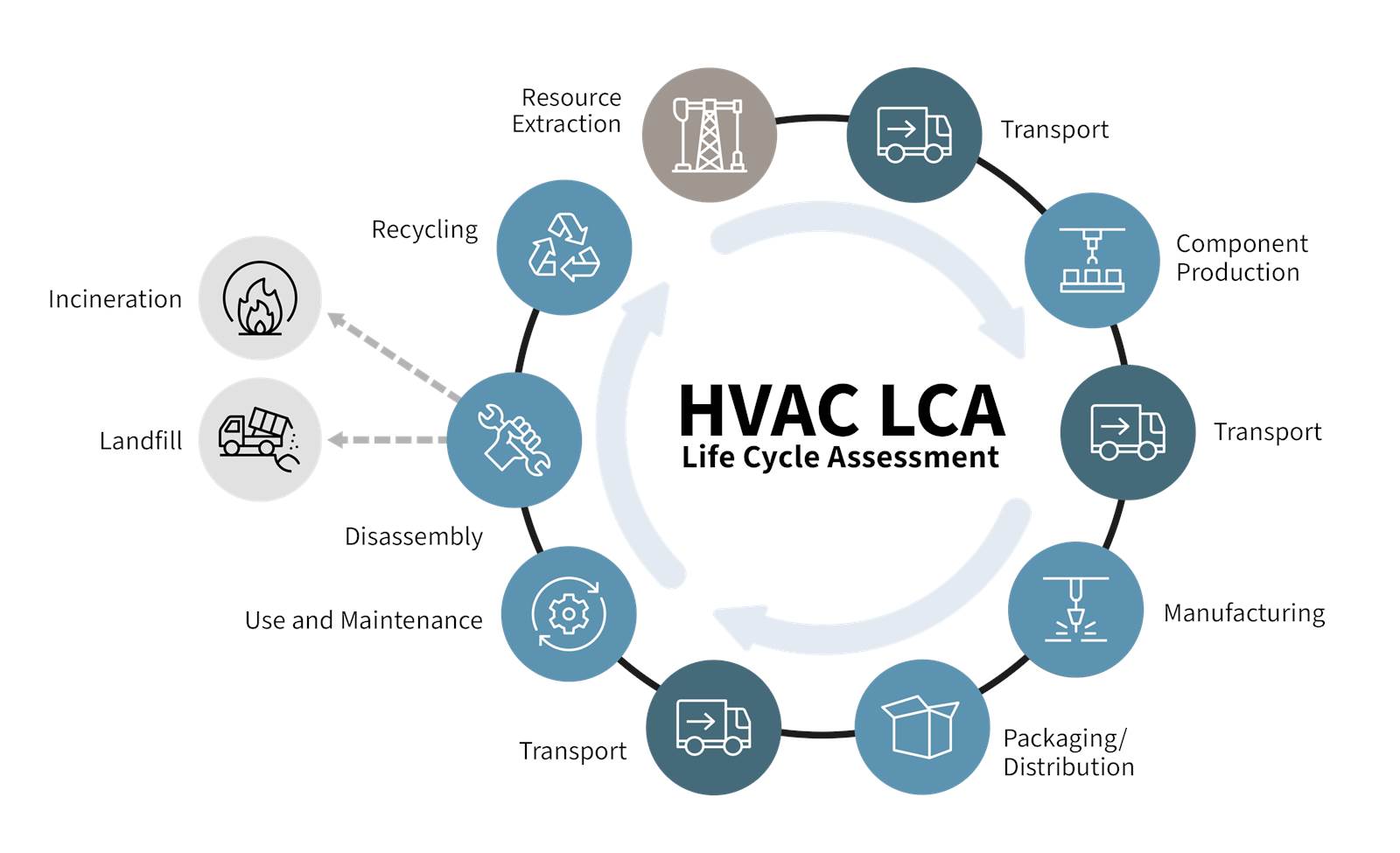
Environmental transparency that supports green buildings, compliance and responsible design.


What is an EPD and why is it important?
An EPD (A Type III Environmental Product Declaration) is a standardised document developed according to EN 15804 and based on Life Cycle Assessment (LCA) methodology. It provides quantified data, verified by a third party, on the environmental impact of a product throughout its entire life cycle. This makes EPDs a trusted and comprehensive source of information for:
- Green building certifications (LEED, BREEAM, DGNB)
- Sustainable design
- ESG reporting and climate strategies
- Transparent communication with customers and stakeholders
And more...
EPDs are data-driven, enable fair comparisons and are credible.
EPD Verified Products
Air Handling Units
-
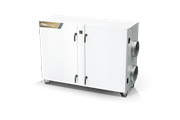 eCO SIDE AIR HANDLING UNIT
- Side connected ducts, pipes and cables for easy installation
- Rotary or Counterflow Plate heat exchanger
- Low noise level <35dB within 3 meters
-
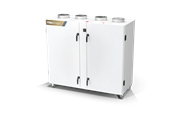 eCO TOP AIR HANDLING UNIT
- Top connected ducts
- Rotary or Counterflow Plate heat exchanger
- Low noise level <35 dB within 3 meters
-
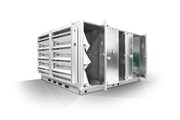 eQL® AIR HANDLING UNIT
- High degree of flexibility of functionality, configuration and materials
- Flexible and high efficiency energy recovery systems
- Optional service corridor
-
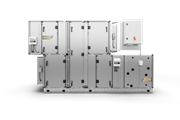 eQ MASTER® AIR HANDLING UNIT
- Designed to be configured to project specific requirements, supporting optimal performance and system flexibility
- Wide choice of energy efficient components enables tailored solutions for output, reliability and lifecycle efficiency
- Multiple heat recovery options allow recovery strategies to be matched precisely to application demands
- Factory integrated ISYteq 4.0 controls support stable operation and optimised energy use
- Low SFP design helps reduce operational energy consumption and total cost of ownership
- Pre-fitted sensors, actuators and internal connections reduce on-site installation time to under 4 hours
- Factory tested controls and components help simplify commissioning and reduce project risk
- Intelligent control functions deliver superior indoor comfort while minimising energy use, resulting in reduced total investment costs.
-
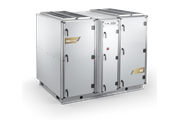 eQ PRIME TOP AIR HANDLING UNIT
- Energy efficient rotary heat exchanger
- Plug and Play installation
- Easy maintenance with front doors
- Connected
-
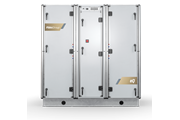 eQ PRIME SIDE AIR HANDLING UNIT
- Energy efficient components and integrated controls
- Plug and Play installation
- Short Delivery time
- Connected
Chilled Beams
-
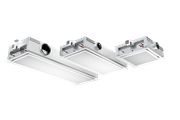 iQ STAR LYRA® II CHILLED BEAM
- Available with Pi function (pressure independant DCV)
- High flexibility
- Low noise
- Easy installation
-
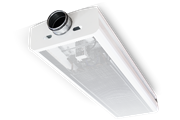 iQ STAR NOVA® II EXPOSED CHILLED BEAM
- Available with Pi function (pressure independant DCV)
- High flexibilty
- Easy installation
-
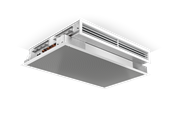 iQ STAR ORION® II Chilled beam
- Available with Pi function (pressure independent DCV)
- Wide range of performances
- Easy installation
-
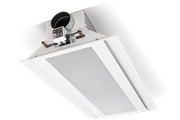 iQ STAR WEGA® II CHILLED BEAM
- Available with Pi function (pressure independant DCV)
- High flexibility
- Easy installation
- Variant for hygienic applications - VDI 6022 standard compliant
-
Hygiene version with coated coil, drop down coil and plenum access for easy cleaning
Fan Coil Units
-
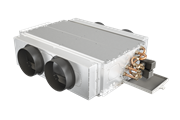 HyFlex-Geko DUCTABLE FAN COIL UNIT
- Wide range of “Plug and play” accessories that are factory mounted
- Low sound power level – 1.8kW total cooling capacity with <30 dB(A) sound pressure
- EC fan XT – Extended Technology
- VDI 6022 certified
- Eurovent certified
-
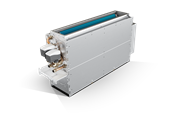 HyFlex-Geko NON-DUCTABLE FAN COIL UNIT
- Wide range of “Plug and play” accessories that are factory mounted
- Low sound power level – 1.8kW totalcooling capacity with <30 dB(A) sound pressure
- EC fan XT – Extended Technology
- 360° Flex Technology for high flexibility on-site
- VDI 6022 certified
- Eurovent certified
Air Volume Dampers
-
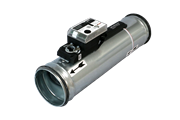 OPTIVENT® ULTRA - ULSA VAV DAMPER
- Accurate air flow measurement
- No pressure loss nor noise of the air flow measurement
- Large air flow range
- Small influence of dust
-
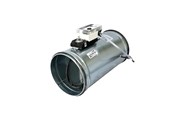 EMPA PRESSURE CONTROL DAMPER
- Constant pressure
- Real-time pressure monitoring with FG compact controller as standard
-
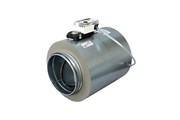 EMPD PRESSURE CONTROL DAMPER
- Constant pressure
- Real-time pressure monitoring with FG compact controller as standard
-
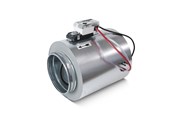 EMSD CIRCULAR VAV DAMPER
- Real time air flow display
- Setting up values requires no special tools
-
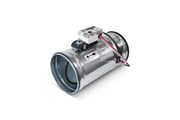 EMSS CIRCULAR VAV DAMPER
- Real time air flow display
- Setting up values requires no special tools
-
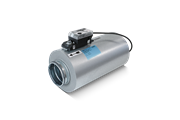 OPTIVENT® ULTRA - ULDA VAV DAMPER
- Accurate air flow measurement
- No pressure loss nor noise of the air flow measurement
- Large air flow range
- Small influence of dust
-
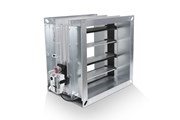 ERPA RECTANGULAR PRESSURE CONTROL DAMPER
- Time efficient installation and commissioning
- Wide airflow range
- High accuracy
-
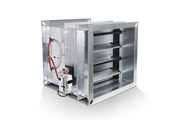 ERVA RECTANGULAR VAV DAMPER
- Time efficient installation and commissioning.
- Wide airflow range
- High accuracy
-
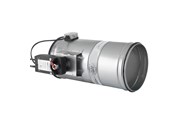 ETCE FIRE DAMPER
- CE marked
- Actuators or Fusible Links available
- Easy installation on a wall or floor
- Veloduct joint for ease of installation and low duct leakage
-
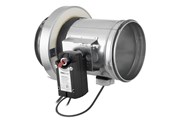 ETPR FIRE DAMPER
- Highest quality of installation with flange
- Easy function testing and integrated microswitches (2 pcs) for open /close indication
- Remote of wall / floor installations in scope of CE-marking
- Latest technology for motorized and fusebox construction
-
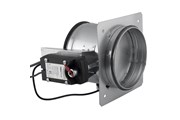 ETPR-E-1 FIRE DAMPER
- CE marked
- Actuators or Fusible Links available
- Easy installation on a wall or floor
- Veloduct joint for ease of installation and low duct leakage
Air Valves
-
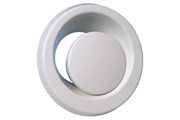 KGEB EXTRACT AIR VALVE
- Easy to adjust
- Low noise level
- Good natural sound attenuation
-
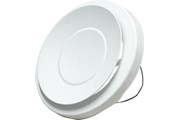 GPDT SUPPLY AIR VALVE
-
 GPDB EXTRACT AIR VALVE
Classic design for all applications
GPDB EXTRACT AIR VALVE
Classic design for all applications -
 NK EXTRACT AIR VALVE
Low structure for modern interiors
NK EXTRACT AIR VALVE
Low structure for modern interiors -
 KTS SUPPLY AIR VALVE
Classic supply air valve
KTS SUPPLY AIR VALVE
Classic supply air valve -
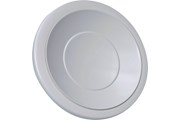 NE SUPPLY AIR VALVE
Low structure for modern interiors
NE SUPPLY AIR VALVE
Low structure for modern interiors -
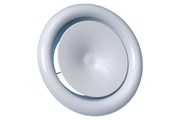 KE SUPPLY AIR VALVE
Classic and versatile
KE SUPPLY AIR VALVE
Classic and versatile -
 RKT NATURAL VENTILATION AIR VALVE
Classic air valve with steel disc for natural ventilation
RKT NATURAL VENTILATION AIR VALVE
Classic air valve with steel disc for natural ventilation -
 KK EXTRACT AIR VALVE
Classic design for all applications
KK EXTRACT AIR VALVE
Classic design for all applications -
 GPDF EXTRACT AIR VALVE
Classic design with spring mounting for all applications
GPDF EXTRACT AIR VALVE
Classic design with spring mounting for all applications
Diffusers
-
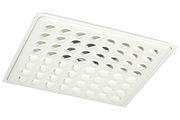 ARIES-1 (DYKH) NOZZLE DIFFUSER
Square nozzle pattern
ARIES-1 (DYKH) NOZZLE DIFFUSER
Square nozzle pattern -
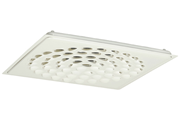 ARIES-2 (DYCH) NOZZLE DIFFUSER
Adjustable nozzles
ARIES-2 (DYCH) NOZZLE DIFFUSER
Adjustable nozzles -
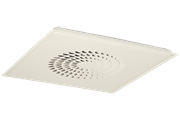 ARIES-3 (DYBH) NOZZLE DIFFUSER
Low sound level and fixed nozzles
ARIES-3 (DYBH) NOZZLE DIFFUSER
Low sound level and fixed nozzles -
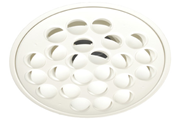 ARIES-4 (DYRH) NOZZLE DIFFUSER
Low sound level and adjustable nozzles
ARIES-4 (DYRH) NOZZLE DIFFUSER
Low sound level and adjustable nozzles -
 ATLAS-1 (RHOH) SUPPLY AND EXTRACT AIR DIFFUSER
Unperforated front plate
ATLAS-1 (RHOH) SUPPLY AND EXTRACT AIR DIFFUSER
Unperforated front plate -
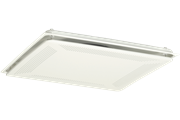 ATLAS-2 (RHKH) SUPPLY AND EXTRACT AIR DIFFUSER
Perforated front plate
ATLAS-2 (RHKH) SUPPLY AND EXTRACT AIR DIFFUSER
Perforated front plate -
 ATLAS-3 (ROPH) SUPPLY AND EXTRACT AIR DIFFUSER
Unperforated front plate
ATLAS-3 (ROPH) SUPPLY AND EXTRACT AIR DIFFUSER
Unperforated front plate -
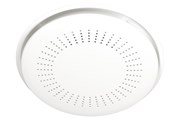 ATLAS-4 (RPPH) SUPPLY AND EXTRACT AIR DIFFUSER
Perforated front plate
ATLAS-4 (RPPH) SUPPLY AND EXTRACT AIR DIFFUSER
Perforated front plate -
 ATLAS-7 (HPKH) EXTRACT AIR DIFFUSER
- Low sound level
- Easy to install and adjust
- Adjustable air slot
-
 INDUS-1 (VSKH) SWIRL DIFFUSER
Adjustable air deflectors
INDUS-1 (VSKH) SWIRL DIFFUSER
Adjustable air deflectors -
 KHDA SUPPLY AIR DIFFUSER
For large premises
KHDA SUPPLY AIR DIFFUSER
For large premises -
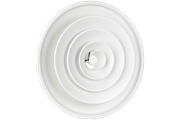 KHAA SUPPLY AIR DIFFUSER
Adjustable air direction
KHAA SUPPLY AIR DIFFUSER
Adjustable air direction -
 NWPA SWIRL DIFFUSER
Wide air flow range of 11-560 l/s
NWPA SWIRL DIFFUSER
Wide air flow range of 11-560 l/s -
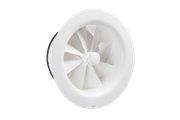 ODZA SWIRL DIFFUSER
High throw length penetration of up to 28 meters
ODZA SWIRL DIFFUSER
High throw length penetration of up to 28 meters -
 PSEG CIRCULAR EGG-CRATE EXTRACT AIR GRILLE
- Can extract large amount of air
- Low sound level
-
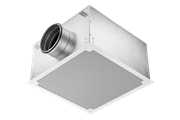 PSWC PERFORATED EXTRACT AIR DIFFUSER
- Can extract large amount of air
- Easy access for cleaning
- Low sound levels even at high airflows
- Ideal for use as the central extract device in DCV systems
-
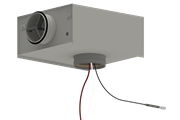 SKKA PLENUM BOX
- Easy to install and adjust
- Includes a ZAEF measurement and adjustment damper that can be easily removed without changing the setting (duct connections 100- 315 mm)
-
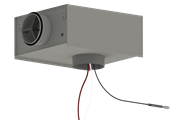 SKKU PLENUM BOX
- Easy to install and adjust
- Includes a ZAEF measurement and adjustment damper that can be easily removed without changing the setting (duct connections 100- 315 mm)