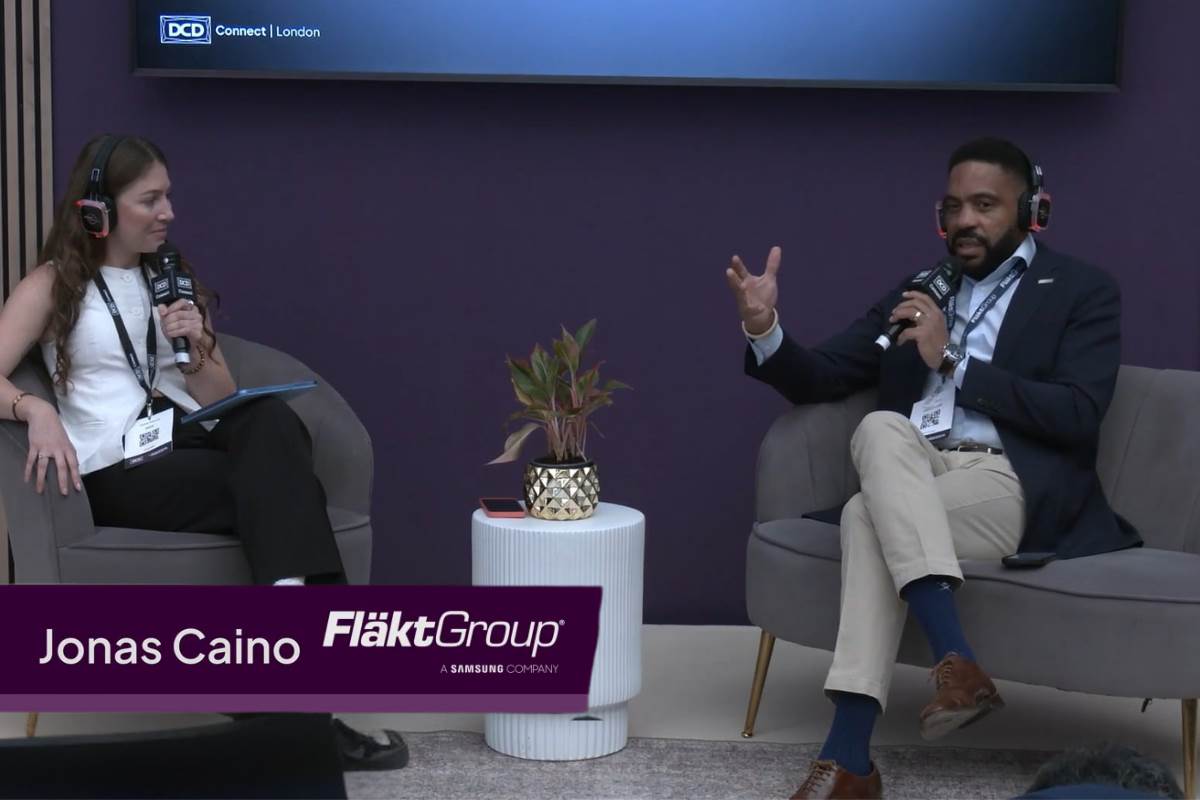
In this interview from the DCD 2026 event in London, Jonas Caino, Business Development Director at FläktGroup, explores how the rapid evolution of AI infrastructure is transforming the way operators approach data centre cooling. With rack densities increasing at an unprecedented pace and technology cycles shortening, Jonas argues that traditional design approaches are no longer sufficient for long-term success.
A key theme throughout the discussion is the importance of designing for future optionality. Rather than building around today's known requirements, Jonas explains how operators can prepare for unknown future demands by incorporating flexibility into cooling architecture, pipework, controls, and thermal infrastructure from the outset. This approach can help avoid costly retrofits and operational disruption as AI workloads continue to evolve.
The conversation also examines the role of liquid cooling and why Jonas believes the future is likely to be hybrid rather than a choice between air or liquid cooling. He discusses how different workloads, power availability, regional requirements, and sustainability goals will influence cooling strategies across Europe, with data centres requiring adaptable solutions that can evolve alongside changing technologies.
Another major focus is the growing importance of controls and system-wide thermal management. Jonas highlights how AI-driven workloads create rapid fluctuations in demand, making it increasingly important for cooling systems, controls, and data analytics to work together as a complete thermal ecosystem rather than as individual components.
The session concludes with a clear message for operators, designers, and consultants: the most successful data centres will be those built with flexibility in mind. As AI continues to reshape infrastructure requirements, future-proofing thermal strategy today could prove far more cost-effective than adapting facilities tomorrow.
Want to learn more about FläktGroup's Data Centre Cooling Solutions? Explore our dedicated solutions page below: