

PI Actuators: The Smart Heart of Modern Chilled Beam Systems
- Theme
- System personalisation
- Reading time
- 9 minutes
- Published
- By
- Michał Kwiatkowski
PI actuators have quietly transformed chilled beams into intelligent, energy-efficient solutions and with over 100,00 units now installed worldwide, their impact is hard to ignore.
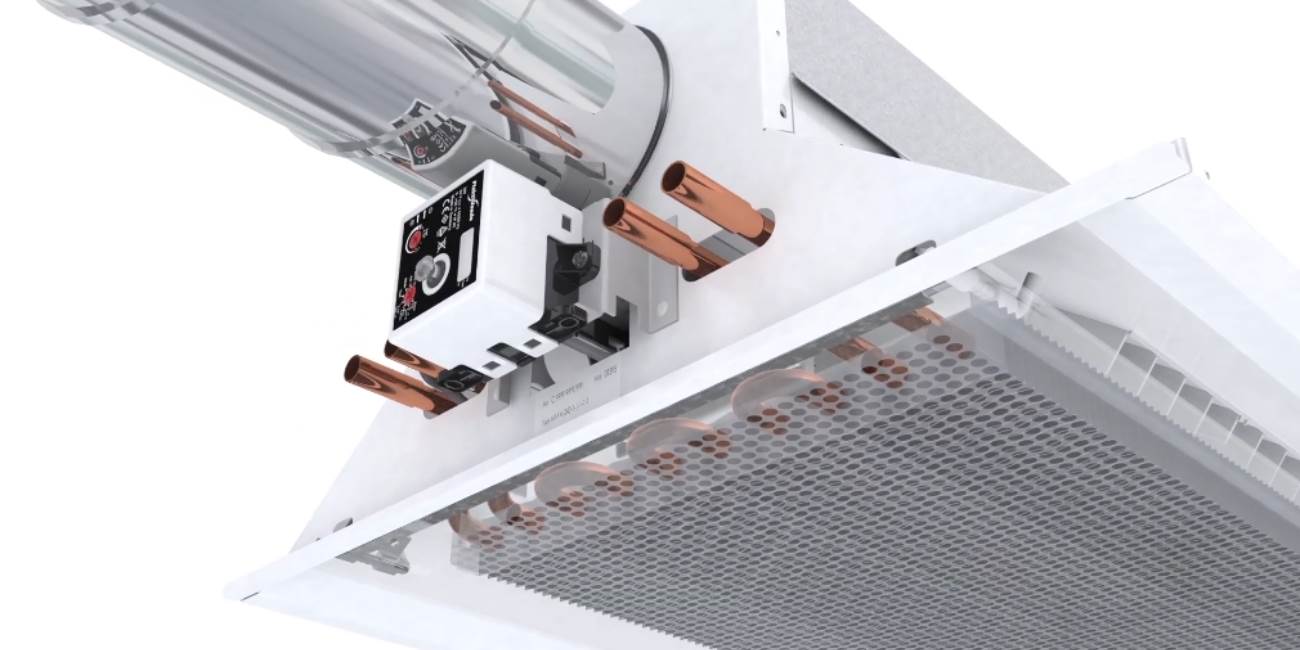
Why PI Actuators are changing the way buildings breathe
Behind every comfortable, well-ventilated office (they do exist, we promise) there’s a complex orchestra of airflow control. PI actuators simplify that complexity, they’re the conductor of that orchestra. By making chilled beams pressure-independent, they ensure perfect airflow delivery, energy savings and comfort – no matter how chaotic the duct pressure becomes. So, let’s dive into how this conductor helps the orchestra to perform a perfect symphony of airflow control.
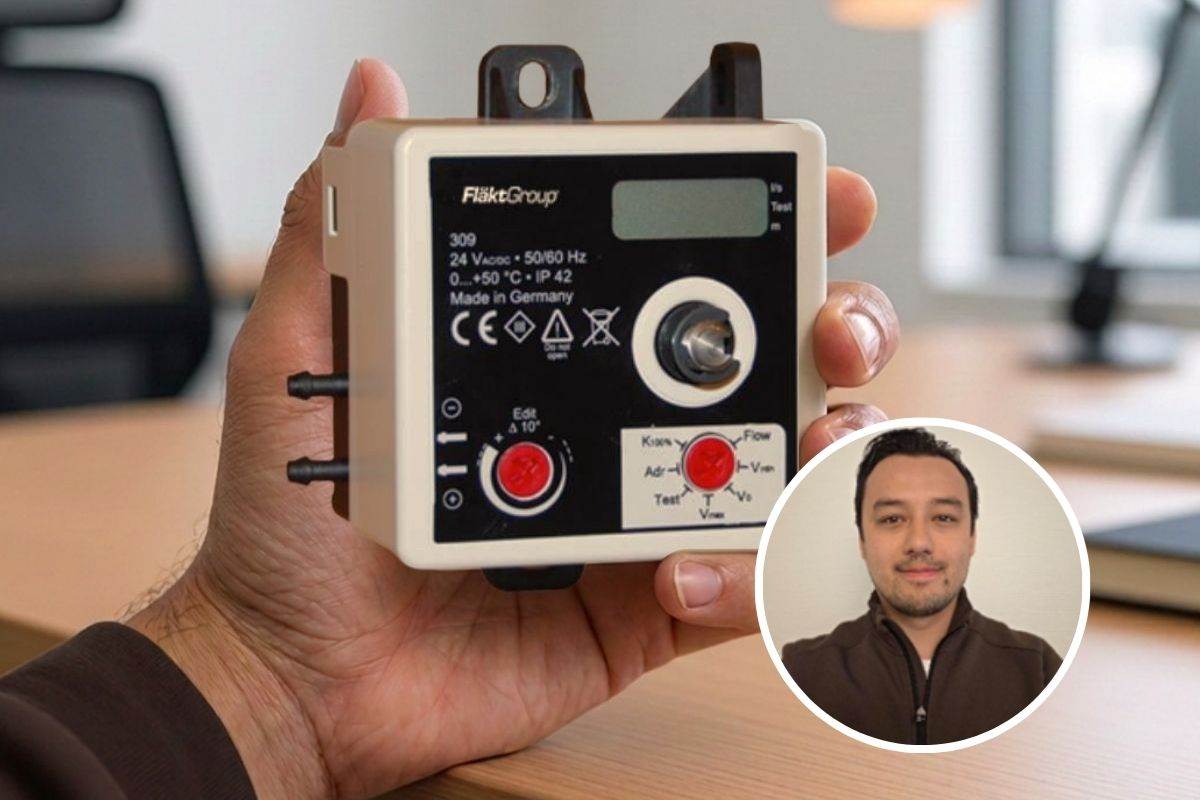
Key insights at a glance
PI actuators bring intelligent airflow control to chilled beam systems by maintaining accurate airflow regardless of changing duct pressures. By combining VAV functionality with pressure-independent operation, they help improve comfort, simplify design, and reduce energy consumption.
- Pressure-independent airflow ensures consistent performance, delivering the required airflow rates (V0, Vmin and Vmax) even when duct pressure fluctuates, helping maintain indoor air quality and occupant comfort
- Built-in VAV functionality simplifies system design, eliminating the need for separate VAV dampers while reducing commissioning complexity, saving space and making chilled beam selection easier for consultants and contractors
- Demand-based operation can significantly reduce energy consumption, adjusting airflow to match occupancy levels and room requirements, helping buildings lower fan energy use compared with traditional constant air volume (CAV) systems.
The smart simplicity behind PI Actuators
It may not be a pie, but a PI Actuator will leave you hungry for more. PI literally stands for pressure independent, and that’s exactly what it does. It is an electric motor that is attached to the chilled beam essentially turning it into the VAV device.
Once installed, the beam can regulate three airflows:
- Vo - for unoccupied room
- Vmin – for occupied room
- Vmax – boost air for maximum room occupancy
It then delivers them precisely even when duct pressures fluctuate, which is often a recurring challenge in tradition systems.
Where are they used
FläktGroup chilled beams with PI actuators are sold across Europe and beyond. We are spreading our love of PI actuators with everyone. They’re ideal for commercial buildings, particularly office spaces where occupancy levels fluctuate throughout the day. Whether a room is empty, half-occupied or suddenly full, the system adjusts automatically to maintain indoor air quality (IAQ) and comfort.
But don't just take our word for it, take it from one of our happy customers based in Sweden:

Customer Testimonial: Assemblin on Their Trusted Partnership with FläktGroup
We have spoken with one of our customers, Mattias Davidsson, who is a Project Manager at Assemblin:
“Assemblin is a full-service installation and maintenance partner operating in Sweden and Norway. We design, install, and maintain technical systems. Assemblin Ventilation has extensive experience in installation, cooling, service, and maintenance of energy-efficient ventilation systems. I have worked with FläktGroup since I joined Assemblin nine years ago. We have always maintained a close collaboration with FläktGroup and work closely with their local offices across several product segments, including air handling units, ATDs, chilled beams, and dampers.”
“When working with FläktGroup, all interactions are smooth, and we receive excellent support. FläktGroup offers high-quality products, and I would like to commend the sales representatives and service engineers. When working with chilled beams, we have demanding requirements for temperature and cooling performance. The PI chilled beams perform exceptionally well, as they ensure proper induction within the beams. As we frequently work with VAV solutions, the PI chilled beams are particularly effective because they are pressure-independent. We are very satisfied with both the quality and functionality of the PI chilled beams.”
How much energy can we save using a Pi actuator?
Exact savings can often vary depending on building design and the control system that is in use, but the potential for savings is substantial.
This table illustrates an example where we have one air handling unit (AHU) delivering air to 30 chilled beams located on one floor of the building. It shows how much energy a building can save when the chilled beams are equipped with PI actuators compared to a traditional CAV (Constant Air Volume) system. In Demand Controlled Ventilation (DCV) systems, PI actuators adjust airflow according to room sensor inputs like occupancy and CO₂.
Energy consumption formula:
E = q x Dp x t ÷ h x1000
|
1 floor - 30 chilled beams |
| Vmax | Vmin | V0 | CAV | |
| Where: | 30 I/s | 15 I/s | 5 I/s | 30 I/s |
|
Totals: 900 I/s | 450 I/s | 150 I/s | 900 I/s |
|
450 Pa | 200 Pa | 75 Pa | 450 Pa |
|
3h | 9h | 12h | 24h |
|
50% | 50% | 50% | 50% |
|
Yearly: 886 kWh | 591 kWh | 99 kWh | 7059 kWh |
| Total: 1576 kWh | 7095 kWh |
It can be made even more efficient when you partner it up with one of our smart controls such as ISYteq 3060. You can learn more about how ISYteq 3060 makes for the perfect partner with a chilled beam system here: ISYteq 3060 – Solve CO2 spikes and dew-point risks with smart room control for chilled beams | FläktGroup
Now scale all that data to the 100,000 PI-equipped beams already in use around the world and you’re looking at a cumulative energy reduction of up to 1.8GWh over 10 years. To put that into perspective, that’s equivalent to powering 500 homes for a year or avoiding around 500 tonnes of CO2 emissions. Now that’s the power of a small device making a big difference.
Our chilled beams with PI function provide benefits for all stakeholders. It really is that simple.
3 reasons why consultants choose PI
1. Easy to design
Because PI actuators make chilled beams pressure-independent, they remove the worries common in ventilation design and that’s fluctuating duct pressure. Consultants don’t need to worry about pressure drops, balancing requirements or the behaviour of the system under different load conditions. The PI actuator ensures the designed airflow is delivered regardless of this. Our SELECT software further simplifies the process by allowing fast, accurate sizing based on real operating conditions. This means fewer alterations and a much smoother design workflow.
2. Works with traditional and pressure-regain systems
Chilled beams with PI actuators are suitable for use in ventilation systems designed using either the equal‑friction method or the static‑pressure‑regain method.
3. Saves time
To create supply VAV system for the room, consultants often need to select a standard CAV chilled beam and a separate VAV damper. This means more time is spent on the selection of two devices and more space will be needed too. Additionally, the pressure from the ventilation cannot be fully utilised in the chilled beams as it is throttled by the VAV damper and may subsequently impact the indoor air quality of a room. But for our IQ STAR chilled beams with PI actuator, they already have built-in VAV functionality.
Need a chilled beam system installed, you’ll also need a PI actuator. Explore our full range of EPD certified chilled beams and get your PI actuator installed to enjoy the perfect indoor comfort, whilst saving energy in your building.

And don't forget the Air Handling Unit
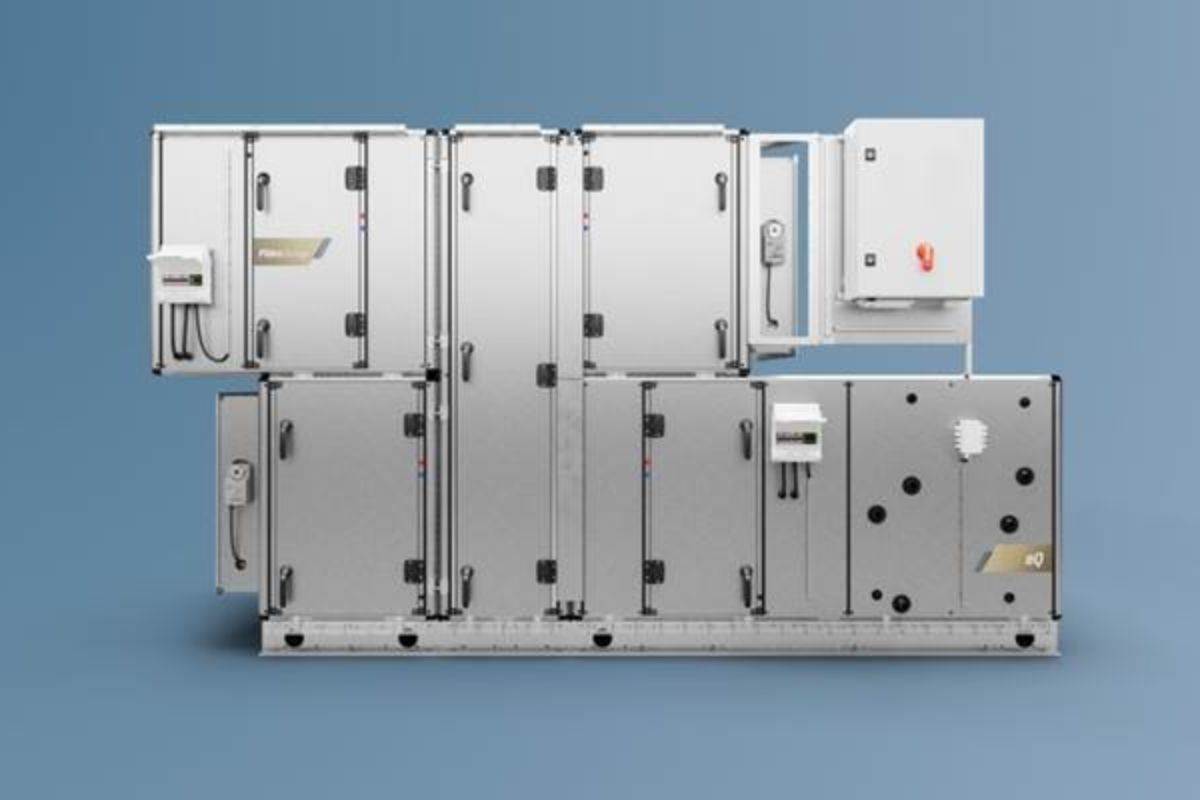
To maximise the benefits of PI chilled beams it is essential to correctly configure the AHU. The simplest way is to install an AHU with integrated controls configured for VAV through pressure control. This is a standard configuration from FläktGroup.
And because chilled beam applications are sensitive to supply air humidity there is often a requirement to de-humidify the supply fresh air. The most economincal way to do this is with a twin wheel AHU which reduces the total cost of installation and running costs. Want to know more about AHU design for chilled beam systems? Check out our article here: