

Critical Air: How HVAC Protects Health in Hospitals and Pharma
- Theme
- System personalisation
- Reading time
- 12 minutes
- Published
- By
- Tom Findley
In healthcare and pharmaceutical environments, air is never just air. It is a critical component of healthcare safety, treatment quality and regulatory compliance. From operating theatres to cleanrooms, the performance of critical HVAC systems can directly influence patient outcomes, product integrity and operational continuity.

🎧 Listen to the Full Podcast Episode
This article shares just a brief glimpse into the insights, stories and perspectives explored in Episode 3 of our podcast. The full conversation goes much deeper. In the podcast our charismatic Service team duo Nadine and Silas unpack real-world scenarios, industry examples and personal experiences that bring these topics to life. If you’re interested in the people, challenges and innovations shaping modern HVAC, we highly recommend you follow and listen to our podcast today:
When Comfort Becomes Critical
In most buildings, HVAC is associated with comfort. In hospitals and pharmaceutical facilities, it becomes a critical safety system. In healthcare environments, precise control of temperature, humidity, air pressure and filtration helps reduce the spread of airborne pathogens, protect vulnerable patients and support safe clinical procedures – all fundamental to healthcare safety.
In HVAC for pharmaceutical facilities, air quality is equally vital, with even small environmental deviations capable of contaminating products and invalidating entire batches of medicine. In both settings, critical HVAC systems operate continuously behind the scenes — quietly maintaining the precise conditions required to protect patients, products and people where the margin for error is exceptionally small.

Key insights at a glance
In healthcare and pharmaceutical environments, HVAC is far more than a background system — it is a critical safeguard for healthcare safety, ensuring patient protection, product integrity, and regulatory compliance. From operating theatres to cleanrooms, reliable and intelligently managed critical HVAC systems play a central role in maintaining safe, controlled environments where failure is not an option.
- Air quality is directly linked to healthcare safety through precise control of temperature, humidity, pressure, and filtration to reduce contamination risk
- HVAC for pharmaceutical facilities protects product integrity by preventing even minor environmental deviations that could compromise entire production batches
- Reliability of critical HVAC systems is non-negotiable as system failure can lead to infection risks, operational disruption, or regulatory breaches
- Preventative and predictive maintenance strategies improve resilience by identifying issues early and enabling faster, more targeted interventions
- Expert service teams are essential to system performance bringing the specialist knowledge, rapid response, and dedication required in high-risk environments
In this article:
- Design considerations beyond HVAC systems in healthcare and pharma
- Why reliability is non-negotiable in healthcare HVAC
- Service support for your HVAC system
- Preventative maintenance
- Reactive to predictive service strategies
- Managing spare parts and supply chain risks
- HVAC solutions that protect lives in healthcare
Design considerations beyond HVAC systems
Beyond the HVAC systems themselves, the design of healthcare and pharmaceutical environments is influenced by a wide range of external factors – from building architecture and process equipment to personnel flows. Regulatory frameworks such as EU GMP Annex 1 continue to evolve, shaping how facilities are designed and operated to maintain the highest standards of contamination control.
While hospitals and pharmaceutical facilities share many overlapping HVAC requirements, their regulatory frameworks, design priorities and operational risks differ significantly. Pharmaceutical environments are driven by product protection and contamination control, whereas healthcare settings focus primarily on patient safety and infection prevention.
Why reliability is non-negotiable in healthcare HVAC
The consequences of HVAC failure in healthcare or pharma environments go far beyond discomfort or operational inconvenience – they impact healthcare safety.
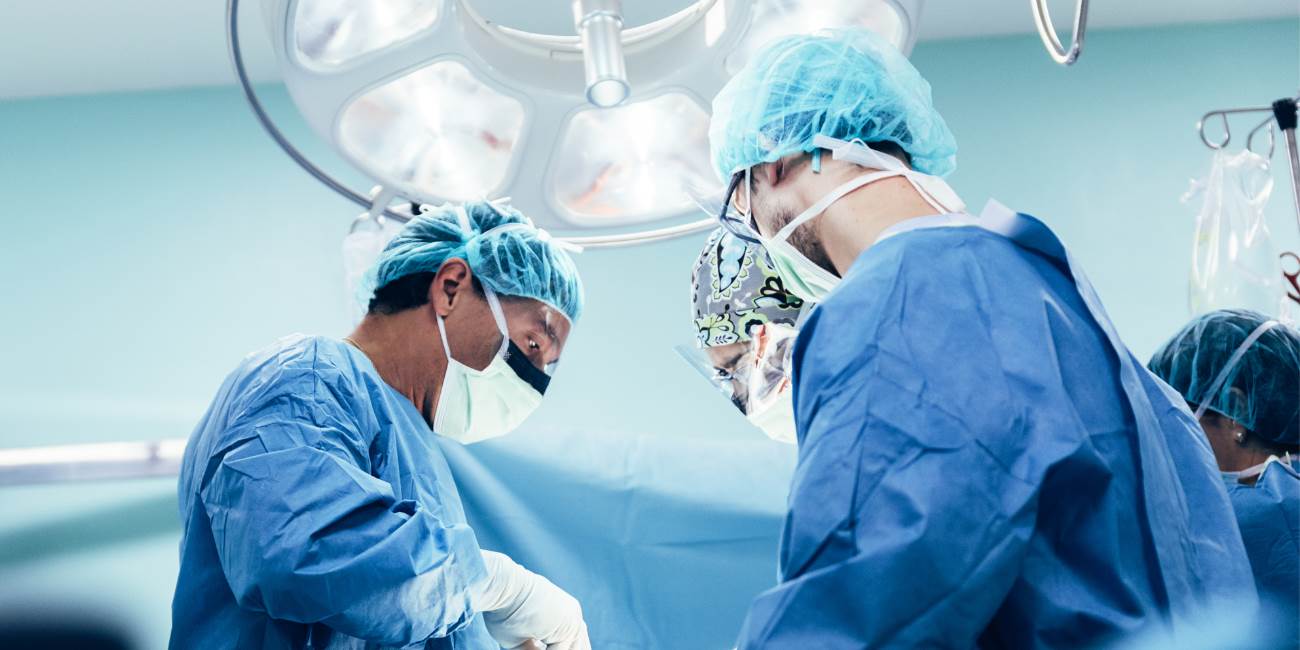
- In operating rooms, inappropriate air pressure or filtration can increase the risk of surgical site infections
- In intensive care units, temperature and humidity imbalance can affect both patient recovery and equipment performance
- In pharmaceutical cleanrooms, even brief environmental deviations can invalidate entire production batches
As Silas points out:
“These are elements where you don’t want to risk any failure of an HVAC system.”
Failure is not an option, which is why reliability and trust in critical HVAC systems, suppliers and service partners is paramount in high-stake environments such as these. And that’s where Service comes in.
Service teams support your HVAC system
Because so much depends on system performance, HVAC service and maintenance in these environments must meet exceptionally high standards. Service is fundamental to regulatory compliance, system resilience and healthcare safety. Nadine understands the importance of service in this sector:
“Regular service isn’t just about efficiency here; it’s about patient safety and regulatory compliance.”
In spaces such as operating rooms or cleanrooms, a failure can quickly escalate into a critical incident, which is why strict service schedules, continuous monitoring and specialist knowledge are essential for critical HVAC systems.
Response times are equally critical as Silas highlights:
“You have to be there within one or two hours – it’s nothing that you can just reschedule for another two weeks.”
This is why many hospitals and HVAC for pharmaceutical facilities invest in on-site technical expertise or dedicated service partnerships to ensure immediate action, regardless of when an issue occurs. The same principle applies across all critical infrastructure sectors, where resilience, uptime and rapid intervention are non‑negotiable.
Preventative maintenance as a foundation of safety
Preventative maintenance forms the cornerstone of reliable HVAC operation in healthcare and pharma. Routine inspections, filter checks and component replacements are designed to identify issues before they become failures – because in these settings, waiting for a breakdown is never an option. As Nadine describes it:
“It’s not just about discomfort – it could lead to contamination, compromised medications, or even risk to patient safety.”
Tasks such as checking HEPA filter performance or calibrating sensors in operating theatres may seem routine, but they play a direct role in maintaining healthcare safety and the long-term reliability of critical HVAC systems.

From reactive to predictive service strategies
One of the major shifts is the growing role of predictive technologies in healthcare HVAC. Traditional service approaches rely heavily on scheduled inspections and human response, but digitalisation is transforming the way critical HVAC systems are monitored and maintained. Silas talks about this very topic, discussing how smart systems can now:
“Get alarms or notifications via your control systems... and probably even have a possibility to make a diagnosis immediately.”
Instead of waiting for technicians to arrive on site to identify faults, connected HVAC systems can monitor their owner performance continuously and flag issues before they escalate. This transition into a smarter digital age reduces response times, improves reliability and helps service teams focus their efforts where they matter most. It also ultimately strengthens healthcare safety as well.
In environments where minutes can make a difference, the ability to move from reactive to proactive intervention represents a significant step forward. This proactive approach is enabled through solutions such as CAREConnect, which connects HVAC systems to continuous monitoring and expert support. Want to know more about CAREConnect? Click the link below.
Managing spare parts and supply-chain risk
The COVID-19 pandemic exposed how vulnerable critical environments can be to supply-chain disruption. Delays in essential components such as filters sensors and compressors created real risks for healthcare facilities and HVAC for pharmaceutical facilities that rely on uninterrupted HVAC operation.
Silas shares how delivery times for some components during this time extended to “67 weeks or even over 70 weeks,” a situation that is simply incompatible with critical HVAC systems. In response, many organisations have re-evaluated how they manage spare parts – focussing not on stockpiling everything but on identifying the components most critical to system failure. Silas further explains:
“There are a few components where you should be prepared for a failure, especially in a critical environment.”
Expert service partners therefore plan an important role her, helping facilities balance financial efficiency with operational resilience and healthcare safety. And it will come as no surprise that FläktGroup’s Service team offers exactly this, making us a lifelong partner for any critical demand facilities.
Human factor behind critical systems
While technology, data and spare parts are all essential, Nadine and Silas repeatedly return to one central theme: the people behind the systems. Service technicians working with critical HVAC systems in healthcare and pharmaceutical environments operate under intense pressure, often knowing that their decisions directly affect patient outcomes. As Nadine puts it:
“It’s the expertise and dedication of the service teams that make all the difference.”
These teams must understand not only HVAC equipment, but also the specific demands of healthcare safety and the consequences of even minor failures. Silas reinforced this point, noting that in these environments there is “no compromise and no cheap solution,” because the risks are simply too high.
HVAC solutions that protect lives in Healthcare
When viewed through this lens, HVAC systems in hospitals and pharmaceutical facilities are far more than building infrastructure. They are an essential layer of protection that allows healthcare professionals to focus on saving lives, confident that their environment is safe and controlled.
As Nadine concludes, “it’s not just a nice to have — it’s a must have.” From preventive maintenance and 24/7 support to predictive technologies and expert service teams, critical HVAC systems play a vital role in safeguarding healthcare safety, protecting patients, products and people every single day.
Want to know more about HVAC for pharmaceutical facilities? Be sure to view our solution page for more information: Pharmaceutical HVAC Industry Solutions | FläktGroup
We also offer specialist ventilation solutions designed specifically for operating theatres: Operating Theatre Ventilation | FläktGroup