

Guide to data centre cooling systems for different facilities and regions
- Theme
- System personalisation
- Reading time
- 15 minutes
- Published
- By
- Julian Appelhoff
Data centre cooling systems play a vital role in maintaining performance, reliability and energy efficiency. As rack densities increase and AI-driven workloads become more common, operators must choose data centre cooling solutions that can support growing thermal demands while helping improve energy efficiency and reduce operational costs.
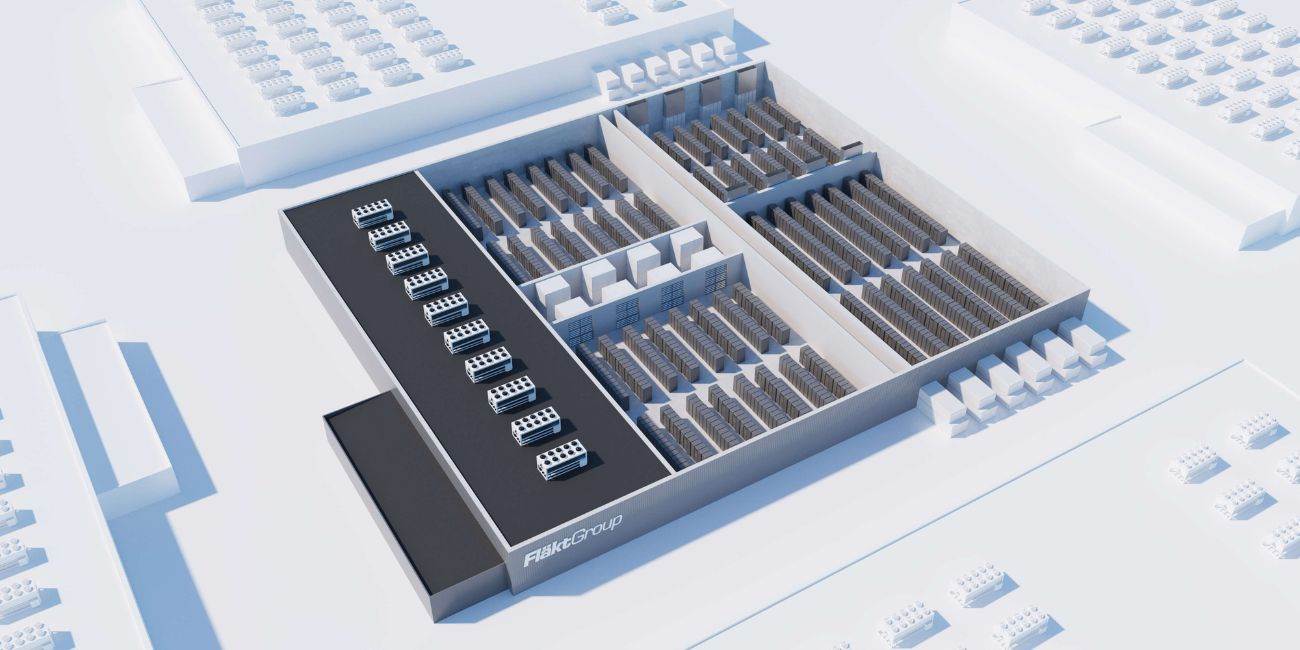
Why Data Centres Matter
When you think of a data centre, you imagine large technical facilities that store, collect, process and calculate data in a huge complex with many colorful, flashing lights. And you're not far off.
A data centre is the physical location where all computers or servers and associated hardware are housed. It contains all the data and infrastructure that IT systems urgently need. This includes servers, data storage, and networking devices. Many companies around the world use data centres to process their digital applications – whether in the company building (Enterprise) or outsourced externally at a data centre provider (colocation/hyperscale) to ensure additional security. Data centres are of great importance, and their proper maintenance is crucial for protecting IT systems.
Key insights at a glance
Data centre cooling has evolved significantly as operators respond to increasing rack densities, rising energy costs and the growth of AI-driven workloads.
- Reliable cooling is essential for uptime, helping to prevent overheating, equipment failure and costly downtime
- Different facilities require different approaches, with enterprise, colocation and hyperscale data centres facing unique cooling requirements
- Energy efficiency metrics such as PUE, EER and SEPR help operators assess cooling performance and reduce operating costs
- Regional climate conditions influence cooling strategies, particularly where free cooling and evaporative cooling can reduce energy consumption
- Liquid cooling data centre technologies are becoming increasingly important, particularly for AI workloads and high-density computing environments where traditional air cooling alone may no longer be sufficient.
In this article:
Types of Data Centres
Understanding what type of data centre facility is important to know when delivering a fully tailored and optimised cooling solution that meets their unique needs:
- Enterprise: Enterprise data centres are owned and operated by a single organisation, typically supporting internal applications, business systems and data storage requirements
- Colocation: Colocation providers rent data centre space, power and cooling infrastructure to multiple customers, while the customers retain ownership of their IT equipment
- Hyperscale: Hyperscale facilities are operated by large cloud providers and support millions of users globally. These facilities are highly standardised and designed for maximum efficiency, scalability and operational resilience.
The main cooling challenges facing data centres
Data centres face several challenges and risks. They are susceptible to various environmental conditions in whitespace, where the IT equipment is located, so it is important to keep the environmental conditions within clearly defined limits. Let's look at some of these challenges and risks that data centres face:
| Temperature control: |
Heat generation: Servers and other IT equipment constantly generate significant amounts of heat during operation. The entire electrical connected load of the hardware is practically converted into heat. Therefore, the IT equipment must be cooled permanently and without interruption. Even short interruptions in cooling can lead to rapidly rising temperatures and thus overheating and equipment failure, loss of performance and a shortened service life.
Hotspots: Uneven temperature environments can create local hotspots in a data centre, leading to overheating. |
| Humidity values: |
High humidity: Too much humidity can lead to increased corrosion on the servers, resulting in higher failure rates and a shortened lifespan. Another possible problem is condensation on cold surfaces of air conditioning technology.
Low humidity: Extremely dry conditions increase the risk of electrostatic discharge (ESD), which can damage the sensitive electronic components in any data centre. |
| Airflow and ventilation: |
Obstacles: Blockages can be as simple as poorly routed cables or equipment that obstructs airflow in the data centre, reducing the supply of cool air. This can lead to overheating. |
| Air quality and pollutants: |
Dust and particles: Dust deposits can obstruct the ventilation of electronic devices, which can lead to overheating and equipment failure.
Contaminants: Chemicals and pollutants in the air can be a major problem for electronic devices, causing corrosion that can lead to damage to sensitive components. |
| Power quality and electrical factors: |
Stable power supply: Voltage fluctuations caused by voltage spikes can damage equipment and cause data loss.
Harmonics: Electrical harmonics can lead to problems such as false tripping of protective devices and electrical disturbances.
Phase shift: Phase shifts between voltage and current lead to a need for larger transformers, more heat generation of cables, higher energy losses, and jeopardize grid stability. |
|
Fire protection and firefighting: |
Fire risks: Electronic devices with high power density pose an increased risk of fire if they are not properly maintained.
Extinguishing systems: A gas extinguishing system is required to extinguish fires without damaging electronic equipment. Many data centres are also operated with oxygen reduction so that no fire can develop. |
Data centres carry many risks, and it is important to understand these challenges to find the right solution. At FläktGroup, we have been active in data centre innovation for over 60 years and offer you optimal solutions.
Assessing and improving energy efficiency
Energy efficiency is one of the most important considerations when selecting a data centre cooling system. However, cooling performance should be assessed with factors such as scalability, operational resilience and long-term operating costs to ensure the solution remains effective throughout the facility lifecycle.
Several key performance indicators (KPIs) are commonly used to evaluate cooling system efficiency:
- SHR (Sensible Heat Ratio) - The Sensible Heat Ratio measures the proportion of cooling capacity used to reduce air temperature (sensible heat) compared with the capacity used for dehumidification (latent heat). A value of 1 indicates that all cooling energy is directed towards lowering temperature
- SEPR HT (Seasonal Energy Performance Ratio – High Temperature) - SEPR HT evaluates the annual cooling performance of a chiller by comparing reference annual cooling demand against annual energy consumption for cooling. It provides a useful benchmark for comparing performance of chillers. Project based SEPR HT values allow the comparison across different climates and operating conditions
- EER (Energy Efficiency Ratio) - EER compares cooling capacity with electric power at a specific operating point. It reflects the real-time efficiency of a cooling system and is commonly used when assessing chillers, CRAH units and other cooling technologies
- PUE (Power Usage Effectiveness) - PUE measures the ratio between annual data centre energy consumption and the annual energy consumed by IT equipment. Because cooling infrastructure often represents one of the largest non-IT energy loads, PUE is widely used to assess overall facility efficiency and identify opportunities for optimisation.
Key data centre cooling efficiency metrics
To compare cooling technologies effectively, operators rely on several industry-standard performance metrics. These indicators help assess cooling efficiency, energy consumption and overall data centre performance, enabling more informed decisions during system design, operation and future expansion planning.
Sensible Heat Ratio (SHR) = Gross Sensible Capacity ÷ Gross Total Capacity
Seasonal Energy Performance Ratio (SEPR HT) = Reference Annual Cooling Demand ÷ Annual Energy Consumption for Cooling
Energy Efficiency Ratio (EER) = Cooling Capacity ÷ Power Input
Power Usage Effectiveness (PUE) = Total Facility Energy ÷ IT Equipment Energy
4 systems for different facilities and regions
There is no single data centre cooling solution suitable for every facility. The most effective data centre cooling systems depend on factors such as facility size, rack density, geographical location, sustainability objectives and future growth plans.
It's all about finding the right solution for your data centre's needs. In most modern facilities, multiple data centre cooling technologies are combined to create efficient and resilient data centre cooling systems. For example, facilities supporting AI applications often combine direct-to-chip cooling through a Coolant Distribution Unit (CDU) with traditional air-based cooling technologies such as Fan Wall Units (FWUs) or Computer Room Air Handlers (CRAHs).
1. Liquid cooling and direct-to-chip cooling
As AI workloads and high-density computing environments continue to expand, liquid cooling data centre solutions have become an increasingly important part of modern data centre design.
Direct-to-chip cooling removes heat directly from high-performance components such as CPUs and GPUs using specially designed cold plates. As a form of direct-to-chip cooling, this approach delivers significantly greater heat transfer efficiency than traditional air cooling and is becoming a key enabler of AI-ready infrastructure.
Compared with traditional air cooling, liquid cooling data centre systems offer significantly higher heat transfer efficiency and support much greater rack power densities.
As computing power continues to increase, data centre operators are seeking cooling solutions that can support future expansion without major infrastructure redesign. Liquid cooling provides the flexibility needed to accommodate growing thermal loads while reducing energy consumption and improving thermal management.
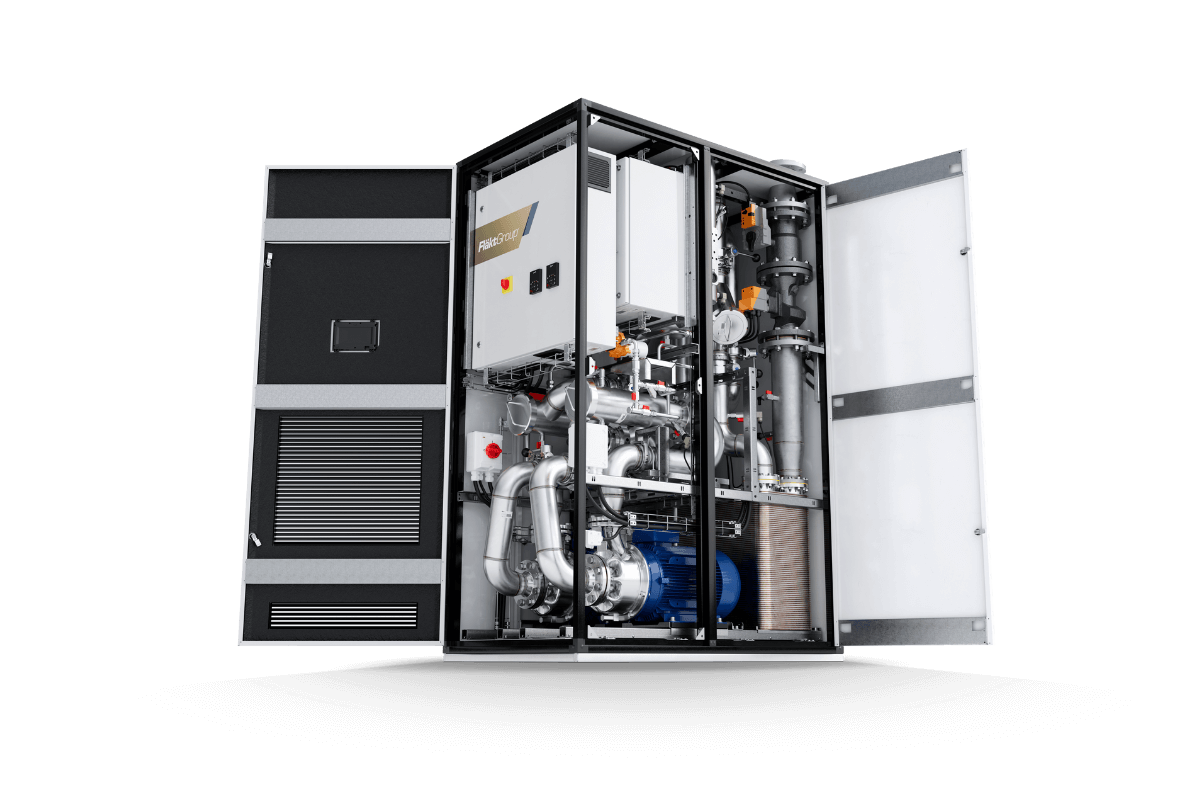
At FläktGroup, our experience in data centre cooling has led to the development of the Liquid-DENCO Coolant Distribution Unit (CDU), designed to support advanced direct-to-chip cooling applications while providing the scalability required by modern facilities.
Liquid-DENCO CDU
Liquid-DENCO adapts seamlessly, providing scalable, flexible cooling solutions to meet the growing needs of data centres.
Liquid-DENCO offers precise thermal management, reducing operating costs while ensuring peak performance. Our coolant distribution unit is expertly designed and tailored to your individual requirements, offering scalability and adaptability. Designed to meet the growing demands of expanding data centres, Liquid-DENCO offers flexible and reliable cooling solutions.
- Hassle-free deployment with quick setup and seamless integration into existing or new infrastructure
- Easily accessible and replaceable components ensure fast maintenance and reduced service times.
- Hot-swappable pumps allow for uninterrupted operation by allowing pump replacement without shutting down the system.
- Integrated intelligent in-house control enables system optimisation in real time.
2. Water-based air cooling
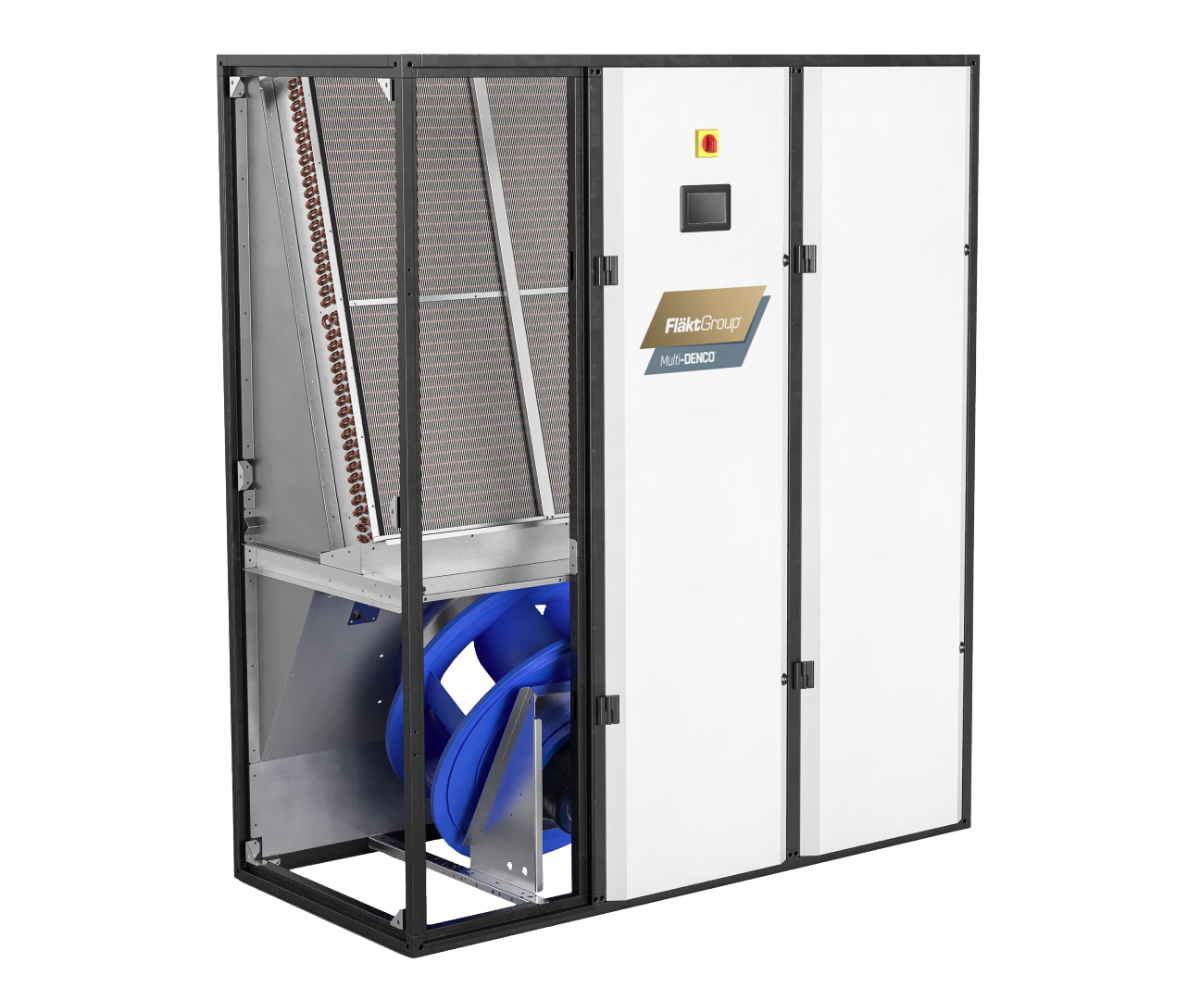
FläktGroup's chilled water systems provide flexible and efficient data centre cooling solutions for enterprise, colocation and hyperscale facilities. Models such as our CRAH units Hydro-DENCO®, Ultra-DENCO®, and Multi-DENCO® DMC, as well as our FWU Aria-DENCO® offer scalable options that can be actively adapted to meet the growing needs of data centres.
Chilled water systems use chilled water, which circulates in a closed circuit, to absorb heat from the air circulating in the data centre, which is permanently heated by the IT hardware. The heat is then released from the water circuit outside the building to the outside air. The core of the system is the free-cooling chiller.
These high-performance data centre chillers cool the water to a certain temperature between 10 °C and 26 °C throughout the year, regardless of the outside temperature. This cooled water then circulates through piping to a fan wall unit (FWU) or computer room air handler (CRAH) in the data centre, where it passes through the heat exchanger and cools the air.
Our Hydro-DENCO® high-performance CRAH, Ultra-DENCO® CRAH, Multi-DENCO® CRAH and Aria-DENCO® FWU systems are those that we at FläktGroup are very proud of. They represent our top-of-the-line offering and meet all your project requirements. They are highly efficient, flexibly scalable and, thanks to their design, offer optimal placement of the cooling units, and high reliability. As a solution for data centre cooling, they are among the best to meet the ever-growing demands of this industry.
3. Direct Evaporative Cooling (DEC)
Direct evaporative cooling is another data centre cooling solution with a unique cooling principle. Warm outside air is passed through an evaporative cooling system, in which the water absorbs heat from the air as it evaporates. This process significantly lowers the air temperature before the air enters the server room, ensuring an optimal indoor climate.
In winter, the cold outside air is mixed with warm exhaust air to reach the target temperature. In summer, evaporative coolers cool the warm outside air to the required temperatures. Air quality is carefully monitored in this system using particulate filters and, if necessary, additional gaseous chemical filters. This reduces the use of data centre chillers, helping lower energy consumption and operating costs compared with traditional mechanically cooled systems in suitable climates.

4. Direct expansion cooling
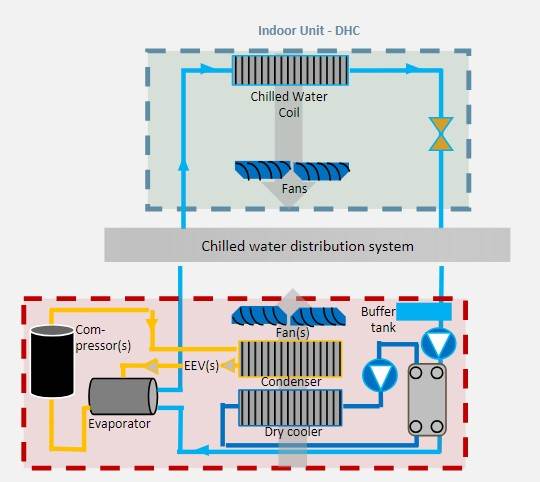
Available in both air-cooled and water-cooled versions, Computer Room Air Conditioners (CRAC) use refrigerants for direct air cooling, making them ideal for data centres. In addition to the refrigerant circuit, the system includes numerous other components such as evaporators, compressors, condensers and expansion valves.
The overall design of such a system is significantly more compact than that of chilled water systems, as the piping is significantly smaller and the externally installed condensers or recooling units are significantly smaller than chillers. Therefore, it is particularly suitable for smaller data centres. Thanks to the compact design, installation is also easier and faster.
The system is primarily designed for smaller enterprise data centres or service rooms but is also suitable for ancillary rooms in hyperscale and colocation data centres, e.g. for rooms where UPS technology is installed, which require lower temperatures than the large data hall.
What's next?
As computing demands continue to grow, selecting the right data centre cooling systems is critical for maintaining uptime, improving efficiency and preparing facilities for future expansion. As technologies continue to evolve and AI workloads drive higher rack densities, operators must stay informed about emerging innovations and industry developments. To explore the trends shaping the next generation of data centre infrastructure, read our article: What We're Watching in Data Centre Cooling: 8 Trends Shaping the Future
Whether evaluating traditional air cooling, liquid cooling data centre technologies, direct-to-chip cooling, or advanced chilled water solutions, operators need a partner that can provide both technical expertise and a broad range of technologies.
With more than 60 years of experience in data centre cooling, FläktGroup supports consultants, contractors and operators with comprehensive data centre cooling solutions that address the requirements of enterprise, colocation and hyperscale facilities.
Contact our team today to discuss your data centre cooling requirements.
Do you have a question? Our team of experts will be happy to help you. Use our inquiry form below to contact a specialist directly.
Contact our team today.