




Umweltproduktdeklarationen (EPDs)
Transparente, verifizierte Umweltdaten, die eine nachhaltige Planung und fundiertere Entscheidungen im Bereich der Klimatechnik unterstützen.

Umwelttransparenz, die umweltfreundliches Bauen, die Einhaltung von Vorschriften und verantwortungsbewusstes Design fördert.


Was ist eine EPD und wozu dient sie?
Eine EPD (Umweltproduktdeklaration Typ III) ist ein standardisiertes Dokument, das gemäß EN 15804 entwickelt wurde und auf der Methodik der Ökobilanz (LCA) basiert. Sie liefert von einer unabhängigen Stelle verifizierte, quantifizierte Daten zu den Umweltauswirkungen eines Produkts über seinen gesamten Lebenszyklus hinweg. Damit sind EPDs eine vertrauenswürdige und umfassende Informationsquelle für:
- Zertifizierungen für nachhaltiges Bauen (LEED, BREEAM, DGNB)
- Nachhaltige Planung
- ESG-Berichterstattung und Klimastrategien
- Transparente Kommunikation mit Kunden und Interessengruppen
Und vieles mehr...
EPDs sind datengestützt, ermöglichen faire Vergleiche und sind glaubwürdig.
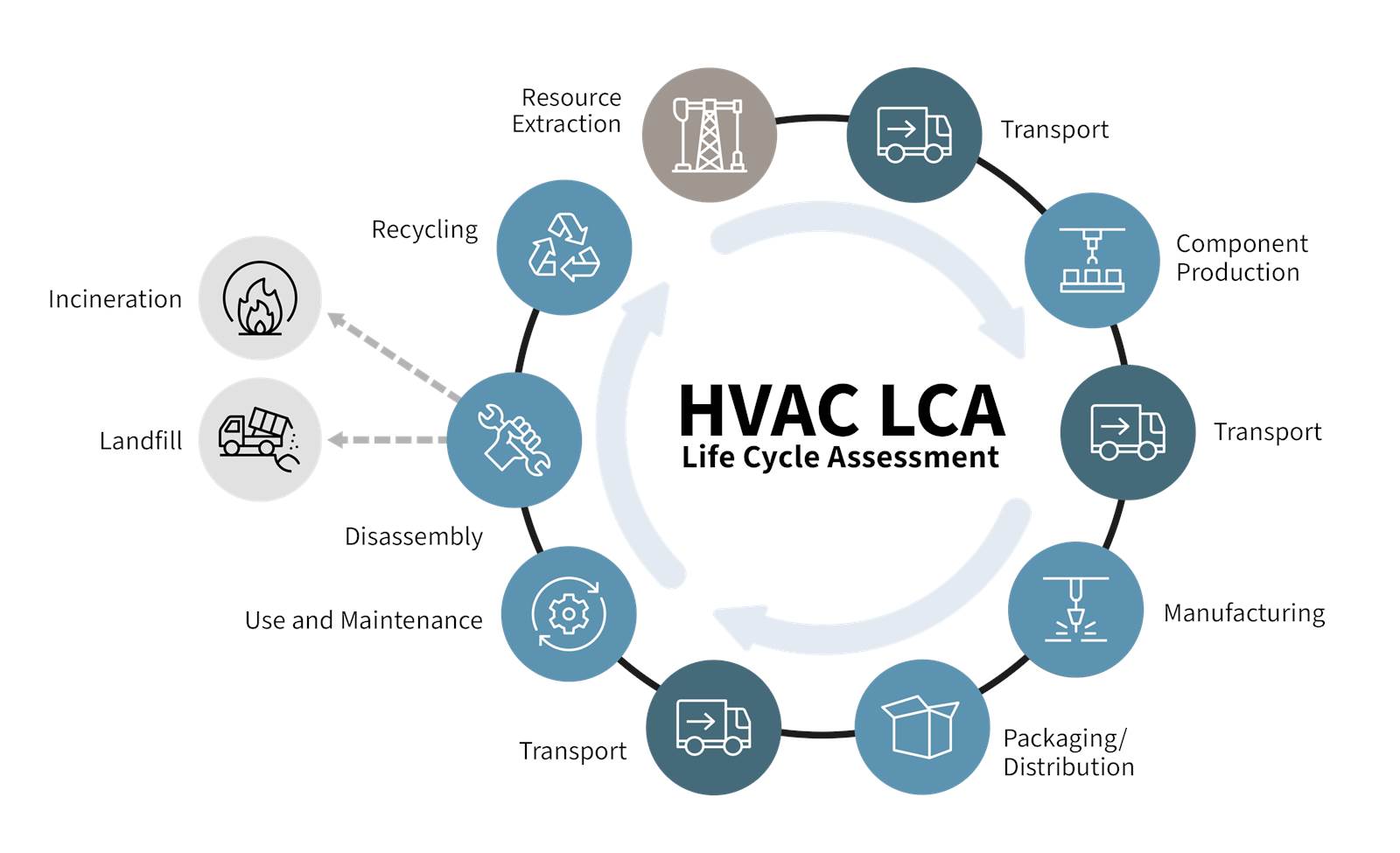
EPD verifizierte Produkte
Air Handling Units
-
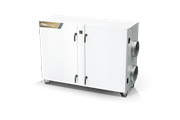 eCO SIDE Lüftungsgerät
- Seitlicher Anschluss von Kanälen, Rohrleitungen und Kabeln für eine einfache Installation
- Rotations- oder Gegenstrom-Plattenwärmetauscher
- Niedriger Geräuschpegel <35 dB im Umkreisvon 3 m
-
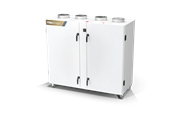 eCO TOP Lüftungsgerät
- Kanalanschlussauf der Oberseite
- Rotations- oder Gegenstrom-Plattenwärmetauscher
- Niedriger Geräuschpege < 35 dB im Umkreis von 3 m
-
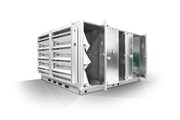 eQL® Lüftungseinheit
- Luftvolumenstrombereich: 28.800-108.000 m³/h
- Flexible Funktionalität, Konfigurationen und Materialien
- Flexibles Energierückgewinnungssystem mit hohem Wirkungsgrad
-
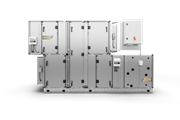 eQ MASTER® Lüftungseinheit
- Entwickelt für die Konfiguration nach projektspezifischen Anforderungen, unterstützt optimale Leistung und Systemflexibilität
- Große Auswahl an energieeffizienten Komponenten ermöglicht maßgeschneiderte Lösungen hinsichtlich Leistung, Zuverlässigkeit und Lebenszyklus
- Vielfältige Wärmerückgewinnungsoptionen ermöglichen eine präzise Anpassung der Energierückgewinnungstrategie
- Die werkseitig integrierte ISYteq 4.0-Regelung sorgt für einen stabilen Betrieb und einen optimierten Energieverbrauch
- Das Design mit niedrigem SFP-Wert trägt zur Senkung des Betriebsenergieverbrauchs und der Gesamtbetriebskosten bei
- Vormontierte Sensoren, Aktoren und interne Anschlüsse reduzieren die Installationszeit vor Ort auf unter 4 Stunden
- Werkseitig getestete Regelungen und Komponenten vereinfachen die Inbetriebnahme
- Intelligente Regelungsfunktionen sorgen für höchsten Raumkomfort bei minimalem Energieverbrauch, was zu reduzierten Gesamtinvestitionskosten führt
-
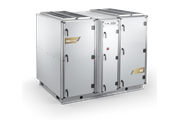 eQ PRIME TOP Lüftungsgerät
- Energieeffizienter rotierender Wärmetauscher
- Plug & Play-Installation
- Einfache Wartung mit Fronttüren
- Vernetzt
-
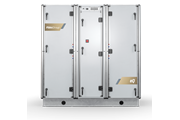 eQ PRIME SIDE Lüftungsgerät
- Funktionsvielfalt
- Energieeffiziente Komponenten mit integrierter Regelung
- Plug & Play-Installation
- Kurze Lieferzeit
- Vernetzt
Chilled Beams
-
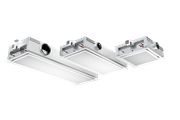 iQ STAR LYRA II Kühlbalken
- Kompaktkühlbalken
- Lüftung, Heizung und Kühlung
- Einstellbare Induktion
- Luftlenkregelung
- Integrierte Regelung
- Erhältlich in drei Größen: 600×600 mm, 600×1200 mm und 600x1800 mm (deckenbündig)
- Optional: Bedarfsgesteuerte druckunabhängige Lüftung (Pi-Funktion)
-
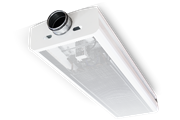 iQ STAR NOVA II KÜHLBALKEN
- Erhältlich mit Pi-Funktion (DCV druckunabhängig)
- Hohe Flexibilität
- Freihängende Montage
- Einfache Installation
-
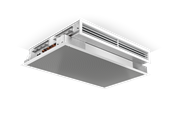 iQ STAR ORION II Chilled beam
- Mit Pi-Funktion (DCV druckunabhängig)
- Hohes Leistungsspektrum
- Einfache Installation
-
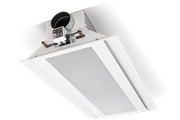 iQ STAR WEGA II KÜHLBALKEN
- Erhältlich mit Pi-Funktion (DCV druckunabhängig)
- Hohe Flexibilität
- Einfache Installation
- Variante für Hygieneanwendungen – konform zur Norm VDI 6022
Fan Coil Units
-
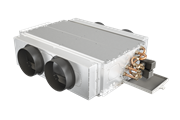 HyFlex-Geko Gebläsekonvektor mit und ohne Kanalanschluss
- Große Auswahl an werksseitigmontiertemPlug- and Play-Zubehör
- Niedriger Schallleistungspegel – 1.8kW Gesamtkühlleistung bei einem Schalldruck von <30 dB(A)
- EC-Ventilator XT – Extended Technology
- VDI 6022 zertifiziert
- Eurovent zertifiziert
-
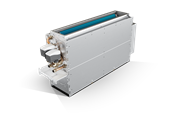 HyFlex-Geko Gebläsekonvektor ohne Kanalanschluss
- Große Auswahl an werksseitigmontiertem Plug- and Play-Zubehör
- Niedriger Schallleistungspegel – 1.8kW Gesamtkühlleistung bei einem Schalldruck von <30 dB(A)
- EC-Ventilator XT – Extended Technology
- VDI 6022 zertifiziert
- Eurovent zertifiziert
Air Volume Dampers
-
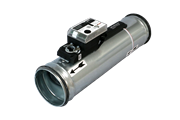 OPTIVENT® ULTRA - ULSA VAV-KLAPPE
- Genaue Luftstrommessung
- Kein Druckverlust oder Geräusch der Luftstrommessung
- Großer Luftvolumenstrombereich
- Staubbeständig
-
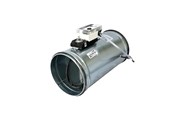 EMPA DRUCKREGLER
- Konstanter Druck
- Echtzeit-Drucküberwachung mit Kompaktregler standardmäßig
-
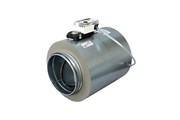 EMPD DRUCKREGLER
- Konstanter Druck
- Echtzeit-Drucküberwachung mit Kompaktregler standardmäßig
-
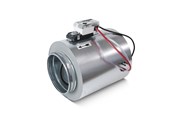 EMSD VOLUMENSTROMREGLER ISOLIERT 1,8-28,8 m³/h
- Luftvolumenstromanzeige in Echtzeit
- Keine zusätzlichen Investitionskosten für Montagewerkzeug erforderlich
-
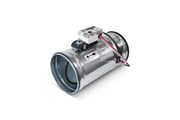 EMSS VOLUMENSTROMREGLER NICHT ISOLIERT 1,8-28,8 m³/h
- Luftvolumenstromanzeige in Echtzeit
- Keine zusätzlichen Investitionskosten für Inbetriebnahmewerkzeuge erforderlich
-
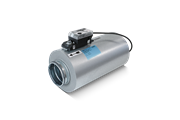 OPTIVENT® ULTRA - ULDA VAV-KLAPPE
- Genaue Luftstrommessung
- Kein Druckverlust oder Geräusch bei der Luftstrommessung
- Großer Luftvolumenstrombereich
- Staubbeständig
-
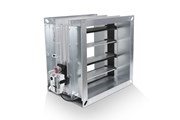 ERPA DRUCKREGLERKLAPPE RECHTECKIG
- Geringer Zeitaufwand für Installation und Inbetriebnahme
- Großer Volumenstrombereich
- Hochpräzise
-
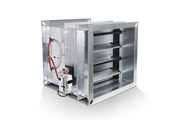 ERVA VAV-KLAPPE RECHTECKIG
- Geringer Zeitaufwand für Installation und Inbetriebnahme.
- Großer Volumenstrombereich
- Hochpräzise
Air Valves
-
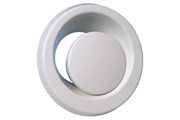 KGEB ABLUFTVENTIL
- Einfache Einstellung
- Niedriger Geräuschpegel
- Gute Schalldämpfung
-
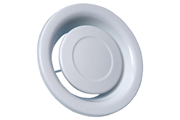 NK ABLUFTVENTIL
- Einfache Installation
- Einfache Einstellung
- Breites Nutzungsspektrum
-
 KTS ZULUFTVENTIL
- Einfache Einstellung
- Niedriger Geräuschpegel
- Einfache Installation
-
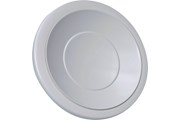 NE ZULUFTVENTIL
- Hergestellt aus Stahlblech
- In Edelstahl erhältlich
- In 6 Größen verfügbar
-
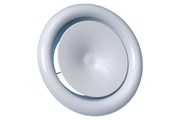 KE ZULUFTVENTIL
- Hergestellt aus Stahlblech
- In 6 Größen verfügbar